Why Black Athletes Are Being Urged to Avoid Some of America’s Biggest Universities
Political Leaders Back Athlete Protest Campaign
House Democratic leader Hakeem Jeffries said he joined the NAACP in backing a boycott push aimed at big college sports programs across a number of Southern states, which is kind of a big deal. The whole thing, according to organizers, was put in motion because people are raising concerns about voting rights and also congressional redistricting plans, and critics say these moves end up weakening Black political representation
The NAACP’s newest effort, named “Out of Bounds”, goes after public universities in Tennessee, Louisiana, Alabama, Florida, Mississippi, South Carolina, Texas, and Georgia. Organizers say the reason is that those states put in place, or at least floated, new voting maps after a recent Supreme Court ruling that weakened parts of the Voting Rights Act. At the same time, civil rights groups argue that the newly drawn district lines dial down the political clout of Black communities.
Focus on Major College Athletic Programs
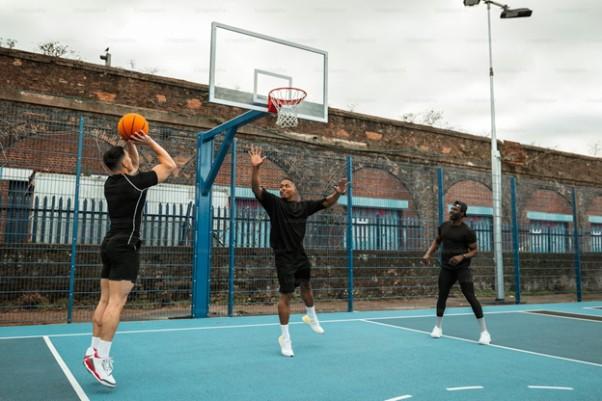
The campaign is kind of encouraging Black high school athletes—especially those football, basketball recruits types—to not commit to universities in those states until fair voting maps are restored. Current college athletes are also being urged to speak out publicly about voting rights issues, and to use whatever influence they have to help push for change, like really push.
Jeffries described the whole thing as an “unprecedented attack” on Black political representation , and said it called for a strong response. During a press briefing he compared the moment to historic activism by sports people like Jackie Robinson, Bill Russell and Muhammad Ali , and then he also criticized universities for staying silent on the issue. In his view, that kind of silence equals complicity or at least it looks that way.
The campaign puts a lot of focus on the Southeastern Conference, which is basically known as the SEC. Twelve of the conference’s 16 member schools are located in the targeted states. Many of those universities run some of the most profitable college athletic programs around, bringing in more than $100 million each year through sports revenue, and it’s not exactly small money.
Wider Political and Economic Pressure
The Congressional Black Caucus has also kind of tied the whole thing to federal legislation about college athlete compensation and it’s connected, sort of directly, to that other debate. Lawmakers said they’re against the bipartisan SCORE Act, claiming universities and athletic conferences didn’t properly stand up for voting rights protections. Because of that, a congressional vote on the bill has been reported delayed more than once, even if people keep expecting it to move.
The NAACP said the boycott effort is meant to squeeze universities, donors, alumni, and sports fans into taking action. They’re also pushing supporters to reroute donations toward historically Black colleges and universities, in a more intentional way.
People backing the campaign think college sports, overall, can be a real, influential instrument for social and political change, kind of the same idea as athlete-led protests from earlier in American history. Still, critics say student-athletes might get stuck with tough choices, if the boycott grows even more over the coming months, and it could become complicated, fast.
Business News
Tyson Foods Shakes Up Its Beef Business: These Major Plant Closures Could Change Everything
From Army Veteran to Award-Winning Entrepreneur: Danielle King’s Inspiring Rise to Success
Amazon Business Hits $60 Billion, How Agentic AI Is Revolutionizing B2B Procurement
How Community Bank Delaware’s $1,000 Donation Is Strengthening the Future of Lewes Firefighters
Autodesk Just Launched a Game-Changing Program Every Small Business Should Know About