How Nation Safe Drivers Powers Roadside Assistance, Claims, and F&I for the World's Biggest Mobility Brands
Innovators of the Year 2026
Every mobility brand makes a promise the moment a customer signs a contract. A dealership promises protection. An insurer promises a response. A fleet operator promises uptime. A rental company promises reliability. Yet the automotive and mobility sector has long carried a structural weakness: the moment a vehicle breaks down, or a policyholder is stranded on a highway shoulder, most brands discover they lack the operational depth to deliver on what they sold.
Roadside assistance, claims coordination, F&I product delivery, and logistics support are complex, capital-intensive, and unforgiving of error. A single mishandled dispatch or delayed response can undo years of brand-building in a matter of minutes.
This gap between promise and delivery has quietly shaped an entire submarket of the automotive economy: companies that operate behind the curtain, supplying the infrastructure that dealerships, OEMs, insurers, fleets, and rental agencies depend on but rarely discuss publicly.
For decades, this back-office layer was treated as a cost center, a necessary evil rather than a strategic asset. Few companies bothered to modernize it. Fewer still saw the transformation that vehicle connectivity, real-time data, and rising customer expectations would eventually demand of it.
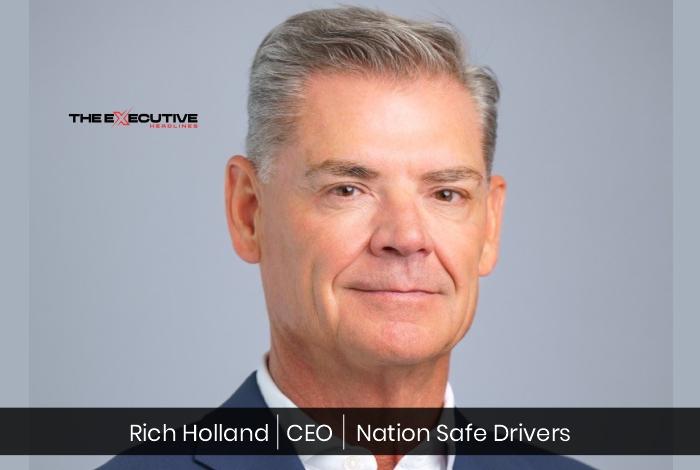
One organization saw it early, and built a business around solving it. Its name is Nation Safe Drivers, and its chief executive, Rich Holland, has spent the last several years converting a legacy provider into what he now describes as a mobility platform.
Introducing the Company Rewriting the Rules
Nation Safe Drivers, commonly known as NSD, was established in 1962 and has operated for more than six decades as a white-label partner to the automotive, insurance, fleet, rental, and leasing industries. The company has never sought consumer-facing recognition. Instead, it has built its reputation quietly, supplying roadside assistance, finance and insurance (F&I) product support, claims administration, and logistics coordination on behalf of brands that put their own names on the customer experience.
That anonymity was, for many years, the point. NSD's clients wanted a partner capable of absorbing operational complexity without diluting their own brand equity. But anonymity alone does not guarantee relevance, and by the time Rich Holland assumed leadership, the surrounding market had shifted considerably. Customers expected real-time visibility into service status.
Fleet managers wanted dashboards, not phone calls. Dealers needed digital tools to compete for margin. Insurers demanded transparency in claims handling. OEMs wanted every touchpoint, including breakdown recovery, to reflect a premium brand experience.
Holland recognized that a company with NSD's history could either remain a capable but invisible vendor, or evolve into the connective infrastructure an entire industry was quietly begging for. He chose the latter.
A Career Shaped by Systems in Transition
Rich Holland did not arrive at this challenge from an abstract interest in corporate strategy. His professional history has consistently placed him inside organizations positioned at the intersection of automotive services, operational scale, and emerging technology.
Across his career, a discernible pattern has held true: he gravitates toward businesses that possess a strong foundation but have yet to unlock the next stage of their growth. Nation Safe Drivers fit that description precisely.
The company already had what many competitors lacked: a national provider network, decades of claims expertise, established F&I capabilities, and relationships built on reliability. What it required was velocity, a way to translate legacy strength into modern execution. Holland's leadership approach has been to supply exactly that, largely through a disciplined operating rhythm rather than dramatic reinvention.
Colleagues describe a leader who begins his day early, typically arriving around 6:45 a.m. to review priorities before the broader organization begins its work. By eight o'clock, the executive team convenes for a daily alignment session structured around the Pareto principle, commonly known as the 80/20 rule. Each leader identifies the handful of priorities, referred to internally as the "80s," expected to generate the greatest organizational impact that day. The result is a company culture that treats focus as a discipline rather than an aspiration.
Building a Platform, Not Just a Portfolio
The clearest evidence of NSD's transformation lies in its expanding brand architecture. Rather than consolidating every service under a single generic banner, Holland has overseen the development of four distinct brands, each addressing a specific segment of the mobility ecosystem while drawing on NSD's underlying infrastructure.
Motify addresses roadside assistance and logistics support for mobility partners seeking modern, technology-enabled solutions. OnRamp is designed to help agents and dealers accelerate sales cycles while gaining access to training and F&I resources.
Ditto focuses on simplifying F&I product delivery through scalable, partner-oriented systems. Fintiv concentrates on financial technology, claims processing, and payment infrastructure, the systems that quietly determine whether a service experience feels seamless or frustrating.
Each brand operates with its own market identity, yet all four are described internally as "powered by NSD." This framing matters strategically. It signals to partners that newer, sharper offerings exist without abandoning the operational depth and trust that six decades of history have established. In effect, Holland has attempted something uncommon in legacy industries: preserving institutional credibility while introducing the agility of a modern platform company.
A Culture Modeled on Motorsport Precision
Holland frequently draws on motorsport, and Formula 1 in particular, as a reference point for organizational culture. At a recent Grand Prix event in Miami, he invited a group of NSD employees whom he described as the company's "best drivers," individuals whose focus, accountability, and execution had materially advanced the organization.
The comparison is deliberate rather than decorative. In Formula 1, the driver receives public attention, yet victory depends entirely on engineers, strategists, data analysts, and pit crews who prepare long before a car reaches the track. Holland applies the same logic to NSD's operations. The customer-facing moment, whether a stranded motorist, a dealership transaction, or an insurance claim, represents only the visible surface of an effort involving technology teams, provider networks, compliance staff, and account managers working in coordination.
This philosophy extends into daily operations. The morning executive meeting functions much like a pit wall, where leadership reviews risk, allocates resources, and confirms priorities before problems escalate. Preparation, in this model, precedes performance. A provider is positioned before a breakdown occurs. A claims process is refined before a policyholder calls. Speed, in Holland's language, does not equate to urgency without structure; it equates to readiness.
Meeting the Demands of a Changing Market
The broader automotive and mobility sector is undergoing substantial structural change. Vehicles now generate continuous data. Customers expect real-time updates rather than delayed phone confirmations. Dealerships face compressed margins and rising competition.
OEMs are protecting premium brand experiences across every customer touchpoint, including breakdown recovery. Insurance providers are prioritizing efficiency without sacrificing satisfaction. Fleet and rental operators require uptime as a competitive differentiator rather than an operational nicety.
Within this environment, roadside assistance has evolved well beyond towing. It now functions as a discipline combining logistics, data, customer experience design, and brand protection simultaneously. F&I services have undergone a parallel transformation, requiring dealers and agents to access modern tools, structured training, and digital claims infrastructure to remain competitive.
NSD's strategy under Holland positions the company to serve this evolving landscape across its full partner base, including dealerships, OEMs, insurance carriers, fleet operators, rental and leasing companies, third-party administrators, and independent service providers. The underlying message the company communicates to its partners is straightforward: NSD exists to power the brands that keep people moving, so those brands can, in turn, serve the world they operate within.
Recognition Rooted in Internal Culture
External performance, Holland maintains, is inseparable from internal culture. That conviction was affirmed when NSD earned certification as a Great Place to Work, a designation reflecting employee sentiment around accountability, collaboration, and recognition rather than marketing positioning alone.
Within the organization, employees are encouraged to view themselves as contributors to forward motion rather than as functionaries executing isolated tasks. The "best drivers" recognized during the Miami event exemplify a broader institutional belief: sustainable performance requires individuals who understand their contribution to the larger objective and choose, deliberately, to pursue it together.
A Legacy Positioned for What Comes Next
Nation Safe Drivers spent more than sixty years operating with deliberate restraint, allowing partner brands to occupy the spotlight while quietly supplying the infrastructure behind their promises. Under Rich Holland's leadership, that restraint has given way to a more assertive strategic identity, one built on the conviction that operational excellence and human connection can, and should, coexist within a single organization.
The company's expanding brand ecosystem, its disciplined daily operating rhythm, and its motorsport-inspired approach to preparation collectively illustrate a broader thesis: in an industry where trust is transactional and immediate, the organizations that endure are those willing to treat every customer interaction as a moment worth engineering carefully in advance.
For Rich Holland, the lesson borrowed from Formula 1 remains central to how he leads. A driver may cross the finish line and receive the applause, yet the race is always won by the team assembled behind that single visible moment. Nation Safe Drivers, under his direction, is positioning itself as that team for an entire industry, the infrastructure ensuring that when the automotive and mobility world needs to move, it moves with confidence.
Business News
Tyson Foods Shakes Up Its Beef Business: These Major Plant Closures Could Change Everything
From Army Veteran to Award-Winning Entrepreneur: Danielle King’s Inspiring Rise to Success
Amazon Business Hits $60 Billion, How Agentic AI Is Revolutionizing B2B Procurement
How Community Bank Delaware’s $1,000 Donation Is Strengthening the Future of Lewes Firefighters
Autodesk Just Launched a Game-Changing Program Every Small Business Should Know About