Making Weather Programmable: How Retrospective Climate Data Fits into Modern Tech Stacks
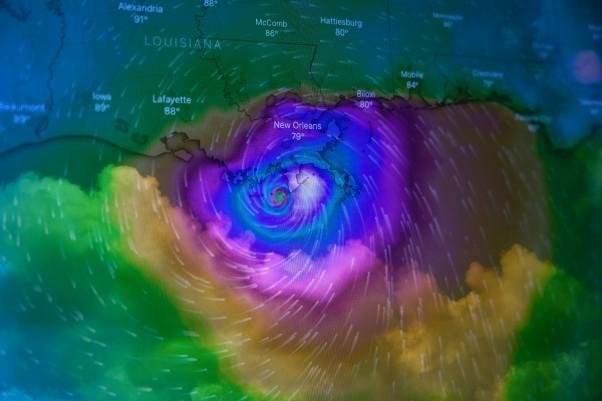
Climate Data Enters the Stack
Enterprise systems are increasingly designed to leverage a range of structured data sources for analytics, forecasting, and automation. Despite this shift, climate data—particularly historical records—remains underutilized. Traditionally, weather information has been confined to niche applications, viewed through dashboards or used for forecasting. That is changing. The emergence of robust, API-driven access is allowing IT teams to treat historical climate data as a live, queryable asset within their architecture.
This evolution turns decades of archived environmental records into dynamic inputs for enterprise platforms. Teams can integrate retrospective weather data into predictive models, planning tools, and performance systems. The result is a more responsive, data-informed infrastructure that accounts for environmental context in operational decisions.
This article explores how retrospective climate data, when made accessible through modern APIs, becomes a valuable component in enterprise tech stacks. It examines the structure of these datasets, their technical delivery, and their use across analytics, infrastructure, and automated systems.
Unlocking the Archive: Structuring Historical Weather for Modern Access
Retrospective climate data refers to weather observations recorded over time, often spanning multiple decades. These datasets include variables such as temperature, humidity, precipitation, wind speed, and solar radiation, captured at daily or even hourly intervals. Sourced from satellites, weather stations, radar, and remote sensors, the data is standardized and archived in formats suited for long-term analysis.
To make this information usable, providers format it into structured datasets. Each record is indexed by time, location, and variable type, allowing precise filtering by coordinates, date ranges, or environmental events. This structure supports integration into enterprise workflows, enabling use in predictive modeling, trend analysis, and infrastructure planning.
With scalable API access, developers can now pull historical weather data directly into their workflows. Whether querying temperature history for a specific location or analyzing storm frequency across multiple years, teams can retrieve precise datasets aligned with business needs.
These records, once static, are now available on demand. When structured for modern delivery, they become a flexible layer within enterprise systems.
APIs in Action: Architecture That Delivers Climate History
The ability to request specific weather data from decades past, filtered by location and variable, is only possible through well-designed APIs. These interfaces allow enterprise systems to query archived data efficiently, returning structured outputs that fit directly into analytical pipelines or operational tools.
Weather data APIs typically support RESTful requests with parameters for date ranges, geospatial filters, and specific weather conditions. Responses are returned in machine-readable formats like JSON, XML, or CSV, making them compatible with data platforms, scripting environments, and integration tools. This architecture eliminates the need for bulk downloads or manual formatting, streamlining data access across environments.
Most enterprise-ready APIs provide authentication tokens, usage monitoring, and rate limiting to ensure secure, controlled access. This enables the automation of recurring queries, links historical weather checks to backend processes, and embeds environmental references in business dashboards. For example, a logistics platform might use this data to track delivery performance under past weather conditions, while an energy provider might refine demand models using long-term temperature patterns.
Integration into cloud-native environments, serverless functions, or data lakes becomes straightforward when data is available through APIs. For development teams using Python, R, or JavaScript, direct API calls can pull structured weather information into analytics models or applications without additional processing.
This programmatic delivery makes historical climate data operational, enabling IT teams to treat it like any other structured business input.
Use Cases Across the Stack: From Dashboards to ML Pipelines
Historical climate data supports a wide range of applications when delivered as a structured, on-demand service. One common implementation is within business intelligence platforms, where past weather trends are used to contextualize metrics such as sales performance, inventory turnover, or service delays. Retailers, for instance, can analyze how temperature fluctuations have influenced foot traffic over time and adjust future staffing and stocking plans accordingly.
Machine learning workflows also benefit from historical data. Training predictive models on localized weather patterns improves their accuracy in demand forecasting, crop yield prediction, or maintenance scheduling. Agricultural companies use this data to optimize planting decisions, while insurers refine risk assessments by incorporating historical storm data into underwriting models.
With APIs in place, climate data can also support real-time or scheduled queries that drive automation. For example, a system may reference weather archives to determine the likelihood of equipment wear in outdoor environments or calculate historical energy usage patterns under varying conditions. When combined with IoT data, weather records enable contextual analytics at the edge, enhancing operations across sectors such as utilities, smart infrastructure, and environmental monitoring.
In finance, historical weather patterns inform long-term risk modeling. Investment portfolios, especially those tied to physical assets, now incorporate environmental factors into broader ESG and sustainability assessments. Location-specific weather records provide quantitative inputs to these frameworks.
Effective use of this data depends on the strength of the underlying climate data infrastructure. The systems that deliver and manage these datasets must support high volumes, fast queries, and reliable uptime to meet enterprise standards.
Overcoming Integration Challenges in Enterprise Environments
Bringing historical weather data into enterprise workflows involves several technical considerations. The most immediate is scale: multi-decade datasets with hourly resolution can become massive. Without filtering or preprocessing, systems may struggle with storage, bandwidth, or compute load. APIs that support fine-grained parameter selection help mitigate this by allowing teams to retrieve only the data they need.
Another challenge is data quality. Records may have gaps or inconsistencies depending on location and time period. Systems must include error handling, fallback logic, or normalization processes to ensure analytical accuracy. APIs that provide completeness indicators or confidence scores improve data reliability and simplify integration with critical systems.
Compatibility with internal data platforms requires schema mapping and timestamp alignment. Enterprise systems often operate in specific time zones or use particular data formats, so integrating external weather records requires standardization. Middleware, ETL pipelines, or direct API consumers must be configured to translate these inputs correctly.
Security is another critical factor. Data access should be authenticated and monitored, especially in regulated industries. APIs used in production must meet enterprise expectations around logging, encryption, and service-level commitments.
These steps are central to building a resilient, scalable enterprise data strategy in which external data sources enhance internal workflows without introducing risk or overhead.
Future-Proofing the Stack with Retrospective Weather Intelligence
As businesses invest in more adaptive, data-driven systems, the environmental context is becoming an essential input. Retrospective weather data provides a foundation for understanding long-term trends, modeling future scenarios, and improving system accuracy under real-world conditions.
Structured access to this data supports advanced use cases, including simulations, automated decision-making, and strategic planning. Whether it's optimizing energy usage, refining logistics routes, or adjusting seasonal forecasts, the ability to reference climate history improves both precision and resilience.
Once integrated into the enterprise stack, weather data becomes a long-term asset. It is reusable, programmable, and available to any system that benefits from environmental awareness. API-driven delivery ensures that this data remains accessible and manageable as systems evolve.
By treating retrospective climate data as part of the infrastructure, organizations can build platforms that are more intelligent, better informed, and better able to adapt to an increasingly variable world.
Business News
S.F. Street Food Law Raises Concerns For Vendors Regarding Higher Costs
JPMorgan & Chase Co Has Put $80 billion of Working Capital For Small Businesses, Giving It Huge Upside Potential
Why Business Leaders Are Prioritising Cost-Effective VPS Infrastructure in 2026
S.F. Street Food Law Raises Concerns For Vendors Regarding Higher Costs
How Industrial IoT Is Actually Changing Traditional OT Systems