Supreme Court Hears a Transgender Rights Case of Major Dimension Whose Impact Getting Beyond Sports in Schools
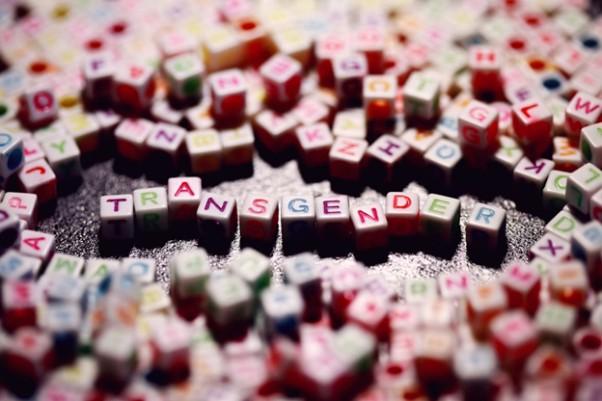
Supreme Court Case on Transgender Rights
The Supreme Court of the United States is going to hear two significant cases regarding the laws of the states that prevent transgender athletes from participating in public school sports teams for girls and women. The cases are from Idaho and West Virginia, and their arguments are set for early January 2026. The rulings could possibly affect not just the sports but also the fundamental issues about transgender rights as recognized by U.S. civil rights laws.
Background: Sports Participation Laws
Idaho and West Virginia, among others, have enacted laws that identify school sports teams based on “biological sex” and effectively exclude transgender women and girls—those who were assigned male at birth but identify as female—from participating in female teams. A number of other states have enacted similar laws, which are often supported by Republican lawmakers.
Opponents of these measures assert that the legislation is a form of prejudice that targets transgender individuals as it restricts their access to public school sports. They maintain that the laws are in conflict with the 14th Amendment's Equal Protection Clause and Title IX, a federal civil rights law that prohibits discrimination “on the basis of sex” in education.
Individual Plaintiffs Speak Out
In the Idaho case, it was the transgender adult and ex-college athlete Lindsay Hecox who got the legal battle started. Hecox later left sports and asked the Supreme Court to dismiss the case, partly due to the public scrutiny and harassment transgender individuals suffer in the current climate. The Court has not yet ruled on whether Hecox’s withdrawal has rendered the case moot.
In West Virginia, it is a minor plaintiff named Becky Pepper-Jackson, who is the main figure in the challenge. The state’s ban prevented her from participating in middle school girls’ cross-country and track teams. While lower courts have permitted her to participate in some events like shot put and discus, Pepper-Jackson and her family still contend that the law restricts her opportunities substantially even more so as a transgender student.
Lower Court Rulings and Legal Stakes
Idaho's prohibition on abortion was initially blocked by federal courts that found the ban to be probably unconstitutional, and the 9th U.S. Circuit Court confirmed the decision. In the case of West Virginia, the 4th U.S. Circuit Court of Appeals decided that the exclusion of Pepper-Jackson from girls' teams was a violation of Title IX and hence, an act of discrimination.
Broader Implications of the Supreme Court’s Decision
The Supreme Court's ruling is said by legal experts to be able to influence areas much wider than sports. A wide-ranging decision might distinguish the legal viewpoints of sex and gender, and their being treated under the civil rights law might be determined. Such a ruling would likely have a say in the future of the restroom, healthcare, military, documentation, and many more rights of transgender people.
This dispute is portrayed as a major legal front in the struggle for transgender rights, which is both a legal and a social issue with consequences that could determine the direction of policy and rights for a long time.
Business News
Tyson Foods Shakes Up Its Beef Business: These Major Plant Closures Could Change Everything
From Army Veteran to Award-Winning Entrepreneur: Danielle King’s Inspiring Rise to Success
Amazon Business Hits $60 Billion, How Agentic AI Is Revolutionizing B2B Procurement
How Community Bank Delaware’s $1,000 Donation Is Strengthening the Future of Lewes Firefighters
Autodesk Just Launched a Game-Changing Program Every Small Business Should Know About